FIDE World Championship · Geneva
Gukesh vs Sindarov
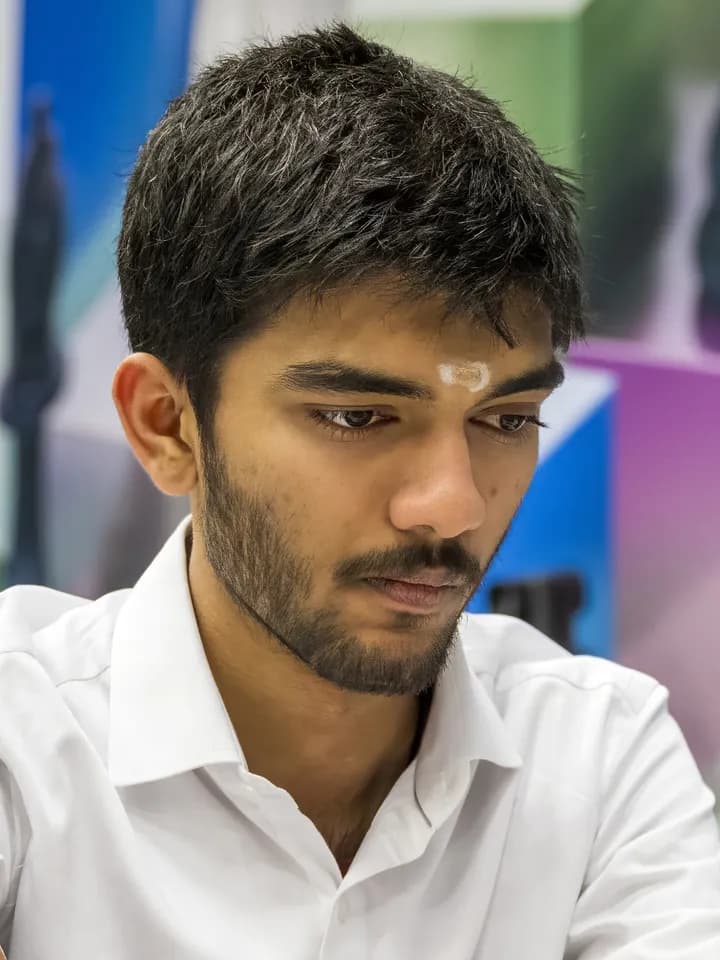 Champion
Gukesh
World Champion
- Classical
- 2711
- Rapid
- 2686
- Blitz
- 2659
FIDE World Championship 2026
Gukesh vs Sindarov
22 Nov – 13 Dec 2026
Fondation Martin Bodmer, Cologny, Geneva
14 classical games · first to 7½ · $2.5M prize fund
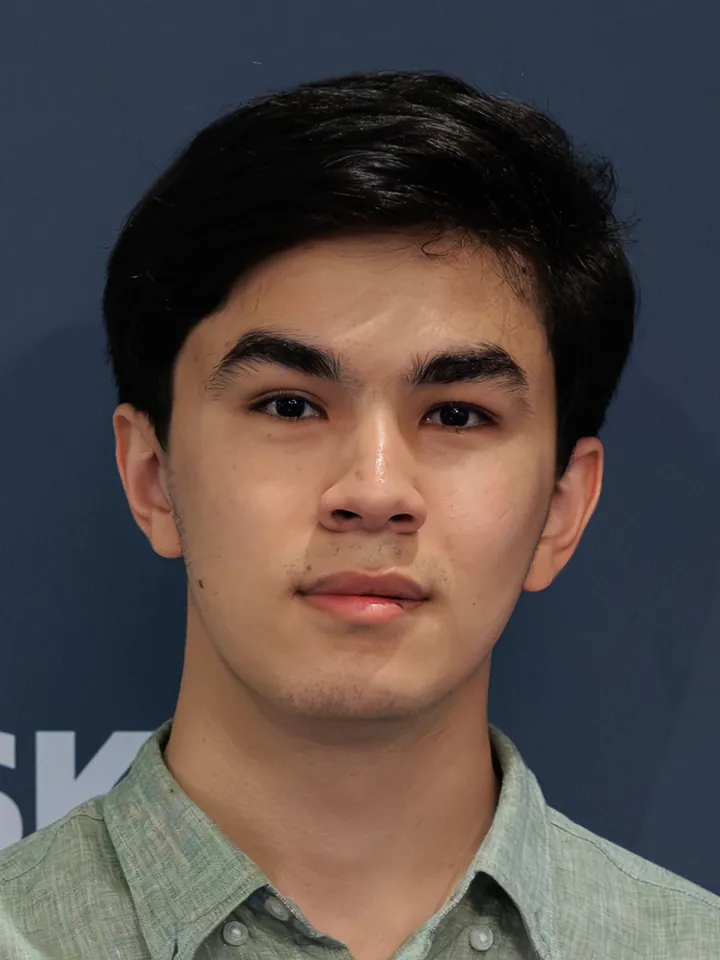
Sindarov
Challenger · Candidates winner
- Classical
- 2782
- Rapid
- 2732
- Blitz
- 2725
22 Nov – 13 Dec 2026 · Fondation Martin Bodmer, Geneva · first to 7½
Game 1 starts in
Tue 24 Nov · 15:00 CET · colours drawn 22 Nov
Gukesh
Chance to win the match
Sindarov
Sindarov wins about 85 in 100 matches · 12.2% go to tiebreaks. Exact probabilities, confirmed by 10,000 simulations.
Scenario builder
Pick the results
Choose a result for any game and every number on this page updates instantly. Hover a button to see where the match odds would go.
who has WhiteBars: Gukesh win · draw · Sindarov win for that game, averaged over the colour draw.
The tiebreak ladder
How it ends
1Classical
14 games
reached 100.0%
77%14 games; first to 7½ points wins, and no further games are played.
100.0%reached
2Rapid 15+10
4 games
reached 12.2%
23%49%27% levelAt 7–7: four rapid games (15 min + 10 s), colours drawn by lot.
12.2%reached
3Rapid 10+5
2 games
reached 3.4%
21%40%39% levelStill level: two faster rapid games (10 min + 5 s), new lot.
3.4%reached
4Blitz 3+2
2 games
reached 1.3%
20%43%37% levelStill level: two blitz games (3 min + 2 s), new lot.
1.3%reached
5Sudden death
3+2 until decisive
reached 0.5%
35%65%Then 3+2 games with alternating colours until one is decisive. No Armageddon.
0.5%reached
Show as a table
| Stage | Reached | Gukesh wins | Sindarov wins |
|---|---|---|---|
| Classical | 100.0% | 11.0% | 76.8% |
| Rapid 15+10 | 12.2% | 2.8% | 6.1% |
| Rapid 10+5 | 3.4% | 0.7% | 1.3% |
| Blitz 3+2 | 1.3% | 0.3% | 0.6% |
| Sudden death | 0.5% | 0.2% | 0.3% |
Win columns are unconditional (share of all matches).
Final classical score
Score distribution
Show as a table
| Score | Finish | Gukesh wins | Sindarov wins |
|---|---|---|---|
| 7–7 | tiebreak | 4.0% | 8.3% |
| 7½–6½ | after G14 | 6.0% | 15.6% |
| 8–6 | after G14 | 0.6% | 4.4% |
| 7½–5½ | after G13 | 2.8% | 18.7% |
| 8–5 | after G13 | 0.3% | 4.9% |
| 7½–4½ | after G12 | 0.9% | 15.7% |
| 8–4 | after G12 | 0.1% | 3.7% |
| 7½–3½ | after G11 | 0.2% | 8.6% |
| 8–3 | after G11 | <0.1% | 1.8% |
| 7½–2½ | after G10 | <0.1% | 2.7% |
| 8–2 | after G10 | <0.1% | 0.4% |
| 7½–1½ | after G9 | <0.1% | 0.4% |
| 8–1 | after G9 | <0.1% | <0.1% |
| 7½–½ | after G8 | <0.1% | <0.1% |
| 8–0 | after G8 | <0.1% | <0.1% |
When is it decided?
Clinch timeline
Show as a table
| Decided at | Date | Gukesh | Sindarov | Total |
|---|---|---|---|---|
| G8 | Thu 3 Dec | <0.1% | <0.1% | <0.1% |
| G9 | Fri 4 Dec | <0.1% | 0.4% | 0.4% |
| G10 | Sun 6 Dec | <0.1% | 3.1% | 3.1% |
| G11 | Mon 7 Dec | 0.2% | 10.3% | 10.6% |
| G12 | Tue 8 Dec | 1.0% | 19.4% | 20.4% |
| G13 | Thu 10 Dec | 3.1% | 23.5% | 26.6% |
| G14 | Fri 11 Dec | 6.7% | 20.0% | 26.6% |
| TB | Sat 12 Dec | 4.0% | 8.3% | 12.2% |
One of 10,000 simulated matches
Deal a simulated match
A sample simulation · Gukesh White in game 1
7½–6½
Gukesh is World Champion — 7½–6½ after game 14.
- Went all the way to sudden death
- 44 sims
- Longest sudden-death run
- 11 games
- Most one-sided finish
- 7½–½ after G8
- Fourteen straight draws
- 31 sims
Model vs markets
What the money says
Bookmaker reference: bet365 (Gukesh 2/1, Sindarov 4/11) implies Gukesh 31.3% · Sindarov 68.8% after removing the margin (as of 27 Sept 2026).
Why the gap?
The markets give Gukesh roughly 2.0× our model’s chance. Our model only knows ratings: Sindarov is 71 points higher on the live list after the Olympiad. Even after calibrating to how drawish title matches are (about 68% of classical games here), that gap makes Sindarov the favourite in every game, and over 14 games small per-game edges add up.
Traders may be pricing what a ratings model cannot see: Gukesh’s experience of winning a title match, months of targeted preparation, and the usual pull of betting markets toward underdogs (the favourite–longshot bias). Neither view is “right” — the gap is the story.
Polymarket, live
Third-party widgets, loaded only when this section is on screen. Prices are not advice; check local rules before trading.
Exploratory · not a forecast
What-if lab
Rating changes apply to classical, rapid and blitz alike (shown: classical). The gold tick marks the fitted θ = 1.97; θ = 1 is the raw game model.
Gukesh wins the match
14.9%
Break-even
Needs the rating grid.
$2.5 million prize fund
Expected prize money
Gukesh
$1.07M
expected, of $2.5M
Sindarov
$1.43M
expected, of $2.5M
Fixed $1.3M / $1.2M split
12.2%
Mostly tiebreak finishes; a few very decisive 14-game matches too.
Form guide
Head to head
Classical
Gukesh 0 · draws 2 · Sindarov 1
Sindarov won at Sharjah 2022; drew in round 1 of Tata Steel 2026
Rapid
Gukesh 1 · draws 0 · Sindarov 0
Gukesh won at Grand Chess Tour Poland 2026
Blitz
Gukesh 0 · draws 0 · Sindarov 2
Sindarov won both at Grand Chess Tour Poland 2026
Chess Olympiad 2026 (Open)
Gukesh
8½/11 · opp. avg 2507
- Round 1 against Alriyami, Faris Rashid: win
- Round 2 against Cahaya, Satria Duta: draw
- Round 3 against Brunello, Sabino: win
- Round 4 against Shirov, Alexei: win
- Round 5 against L'Ami, Erwin: win
- Round 6 against Vokhidov, Shamsiddin: draw
- Round 7 against Fernandez, Daniel Howard: win
- Round 8 against Muradli, Mahammad: draw
- Round 9 against Donchenko, Alexander: win
- Round 10 against Nigmatov, Ortik: win
- Round 11 against Dudin, Gleb: loss
Sindarov
7/10 · opp. avg 2648
- Round 2 against Flores Quillas, Diego Saul Rodri: win
- Round 3 against Blohberger, Felix: win
- Round 4 against Gurel, Ediz: draw
- Round 5 against Leko, Peter: win
- Round 6 against Erigaisi Arjun: draw
- Round 7 against Wei, Yi: draw
- Round 8 against Bluebaum, Matthias: win
- Round 9 against So, Wesley: loss
- Round 10 against Hovhannisyan, Robert: win
- Round 11 against Ivanchuk, Vasyl: draw
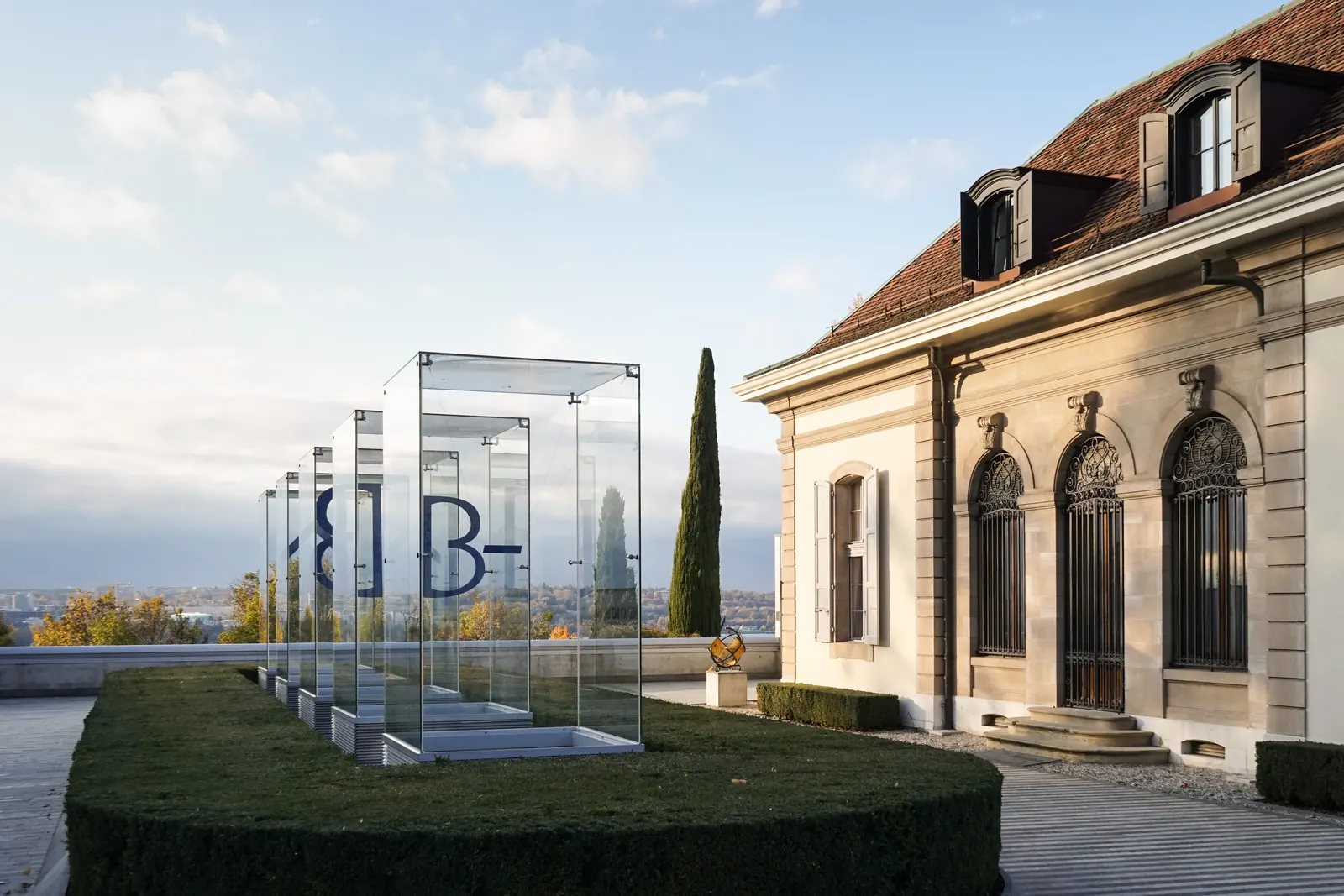
Fondation Martin Bodmer · Cologny, Geneva
Schedule
Games start at 15:00 CET. Opening ceremony at the Palais des Nations on 22 Nov, where the colours are drawn. No draw offers before Black’s 40th move.
Tiebreaks (only at 7–7) and the closing ceremony are on 12 Dec. Games after the match is decided are not played. FIDE regulations (PDF)
How this works
Methodology
Game model
Each game’s win/draw/loss chances come from Pawnalyze’s machine-learned game model (LightGBM), the same one behind our Olympiad forecasts. It takes both ratings and who has White.
Ratings are the live ratings after the Olympiad: Gukesh 2711, Sindarov 2782 classical (source: live-2026-09-27 (post-Olympiad, FIDE formula)). They are refreshed when FIDE publishes a new list.
Why title matches are calibrated
World Championship games are unusually drawish: two elite players, months of preparation, and a long match reward caution. The raw model expects about 52% draws here; recent title matches drew far more often.
We scale the odds of a draw by a single factor θ = 1.97, fitted by maximum likelihood on the 84 classical games of the 2013–2024 World Championship matches, which gives about 68% draws. Extra draws come out of both players’ wins, which shrinks the favourite’s edge in each game and makes a 7–7 tiebreak more likely, so calibration helps the underdog (Gukesh 10.9% raw → 14.9% calibrated).
Exact odds, confirmed by simulation
Because each game depends only on colours and ratings, the whole match can be solved exactly: a small dynamic program over the score, game by game, stopping as soon as someone reaches 7½, then a closed form for the tiebreak ladder.
As a cross-check we also play 10,000 full simulated matches. Every number must agree with the exact answer within sampling error (4 standard errors) before a run goes live — this run’s largest deviation is 1.95 standard errors. The page recomputes the same exact odds in your browser whenever you pick a result.
Tiebreaks and prize money
- 1. Classical. 14 games; first to 7½ points wins, and no further games are played.
- 2. Rapid 15+10. At 7–7: four rapid games (15 min + 10 s), colours drawn by lot.
- 3. Rapid 10+5. Still level: two faster rapid games (10 min + 5 s), new lot.
- 4. Blitz 3+2. Still level: two blitz games (3 min + 2 s), new lot.
- 5. Sudden death. Then 3+2 games with alternating colours until one is decisive. No Armageddon.
Rapid games use rapid ratings; blitz and sudden death use blitz ratings. The draw calibration is applied to classical games only — faster games use the raw model. $200,000 per game won; the rest is shared equally. Fixed $1.3M / $1.2M split if the match goes to tiebreaks, ends 7½–6½ with 13 decisive games, or ends 8–6 with 14 decisive games.
Rules: FIDE World Championship Match 2026 regulations (PDF). Model lgbm-v1-grid5 · run 1.
Photo credits
- Gukesh in 2024 (cropped) by Frans Peeters, CC BY-SA 2.0 (adaptation shared under CC BY-SA 2.0), via Wikimedia Commons. Cropped to head and shoulders, resized and converted to WebP.
- Gukesh D, Tata Steel Chess Tournament 2025, Round 1 (NZ9 0632 t 03) by Frans Peeters, CC BY-SA 2.0 (adaptation shared under CC BY-SA 2.0), via Wikimedia Commons. Cropped to 16:9, resized and converted to WebP.
- Javokhir Sindarov at the Naroditsky Memorial Rapid and Blitz 2026 by ChessKelly (Kelly Centrelli / Charlotte Chess Center), CC BY 4.0, via Wikimedia Commons. Cropped to head and shoulders, resized and converted to WebP.
- Javoxir Sindarov (46th FIDE Chess Olympiad, 2026) by TheBoburshokh, CC BY 4.0, via Wikimedia Commons. Cropped to 16:9, resized and converted to WebP.
- Fondation Martin Bodmer by Alpra ArazeL, CC BY-SA 4.0 (adaptation shared under CC BY-SA 4.0), via Wikimedia Commons. Resized and converted to WebP / JPEG.